





Functional ceramics-based sterilizers
A specialized ceramic coating converts primary radiation into pulsed high-density infrared radiation.
A key feature of the method is not only heating the sterilized object, but also forming a pulsed radiation flux capable of penetrating the processed material. This allows operation at lower average power compared to continuous radiation and maintains a relatively low temperature in the operating chamber.
Sterilizer designs were developed taking into account device purpose, operating chamber volume, irradiated surface area, and characteristics of the sterilized material.
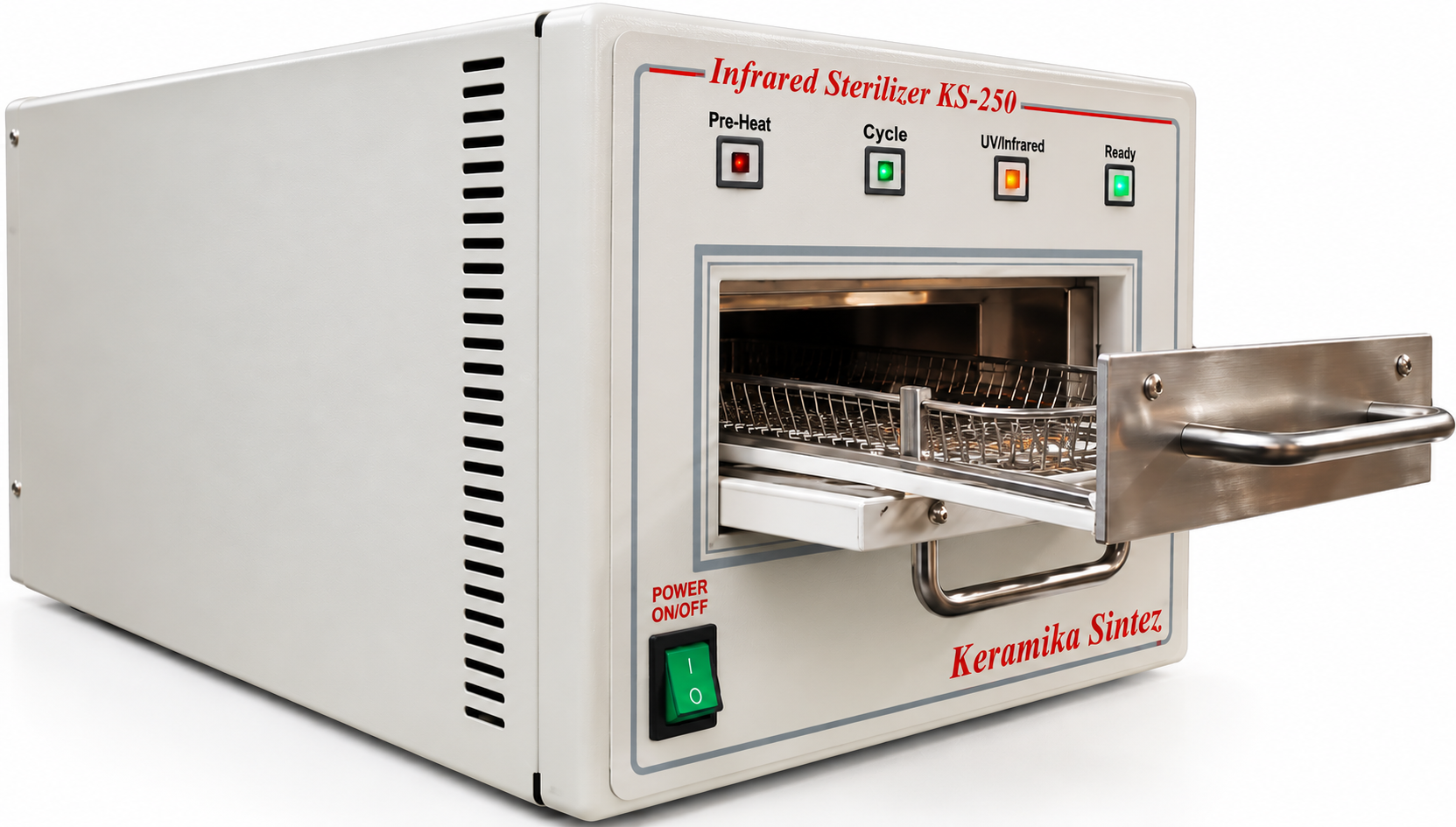
Sterilization of medical instruments
The sterilizers are designed for processing medical instruments, including glass and metal items. Operating modes for medical instrument processing operate at temperatures of 100–180 °C with sterilization times up to 5 minutes.
For a conventional autoclave, temperatures are 121–132 °C and sterilization duration is 1–1.5 hours. As one of the disadvantages of wet sterilization, the authors consider the combination of high temperature and moisture, linking it to the potential for corrosion and surface alteration of instruments.
Pulsed infrared radiation, according to the method, enables greater penetration depth without the need to maintain high average continuous radiation power.
As a result of tests, the surface condition of instruments after treatment was evaluated as improved. Studies were conducted at the University of California Medical Center.
Surface of instruments after treatment
Comparative analysis of the cutting edge and surface microstructure of the scalpel
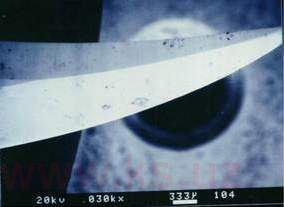
Scalpel surface after autoclave
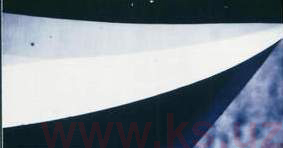
Scalpel surface after IR sterilizer
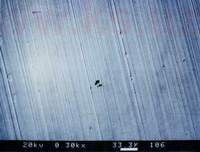
Surface of a new scalpel
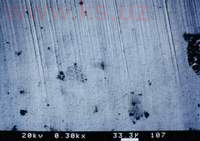
Scalpel surface after autoclave
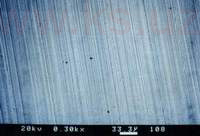
Scalpel surface after IR sterilizer
Operating principle of pulsed IR sterilization
The foundation of the technology is functional ceramics that convert primary source heat into infrared radiation with specified characteristics.
Physical and technical description: Pulsed IR radiation, in resonance with water molecules, penetrates the microorganism and rapidly transfers energy to the moisture it contains. This leads to rapid heating of the moisture, steam formation, and, according to the described mechanism, destruction of the microorganism structure.
Additionally, the effect of IR radiation on organic molecules and processes associated with microorganism vital activity and reproduction is addressed.
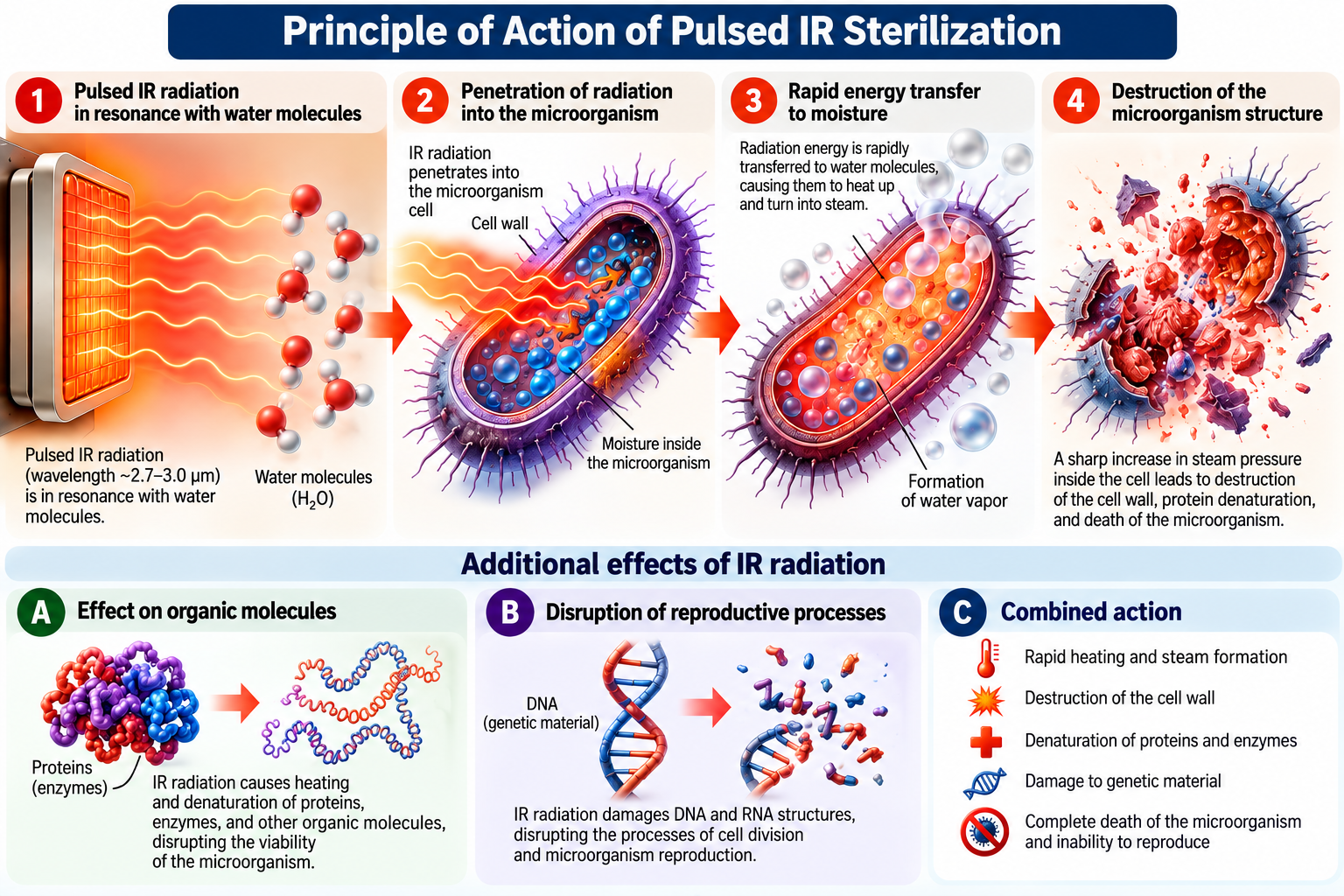
Main technical features of the technology
- Use of functional ceramics as a transforming element for infrared radiation;
- Formation of high-density pulses;
- Directional distribution of radiation inside the working chamber;
- Ability to process objects without using additional moisture;
- Temperature control of the sterilized instrument in designs equipped with a temperature sensor;
- Programmable sterilization modes in the described designs;
- Interlock systems in case of an incomplete cycle, open door, or emitter malfunction;
- Light and audible indication of cycle completion and faults.
Sterilizers for other objects
In addition to medical instruments, pulsed sterilizers can be used for processing dressings, mattresses, clothing, and other objects. For this application, the source cites an operating mode with temperatures up to 60 °C and processing times of 20–60 minutes.
Functional ceramics are also being considered for use in hospital waste disposal systems. The described cycle includes drying with simultaneous low-temperature sterilization, high-temperature treatment, pulsed exposure, and subsequent incineration of organic residues.
The described developments demonstrate the direction of functional ceramics application in infrared sterilization systems. The foundation of the approach is the conversion of primary heating source energy into directional infrared radiation, including pulsed radiation. Particular emphasis is placed on uniform irradiation of the working area, radiation penetration depth, temperature control, programmable modes, and operator safety.