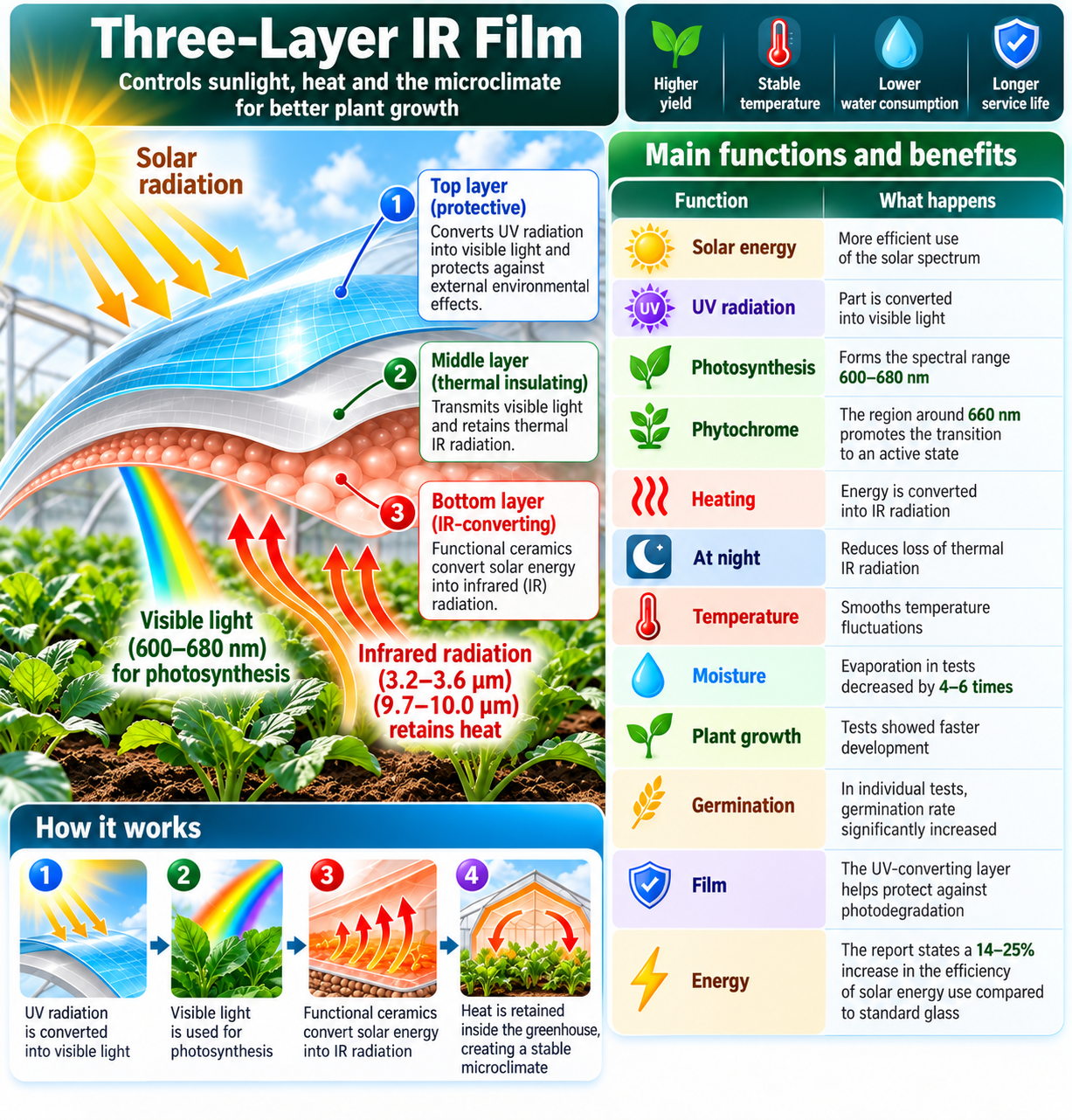




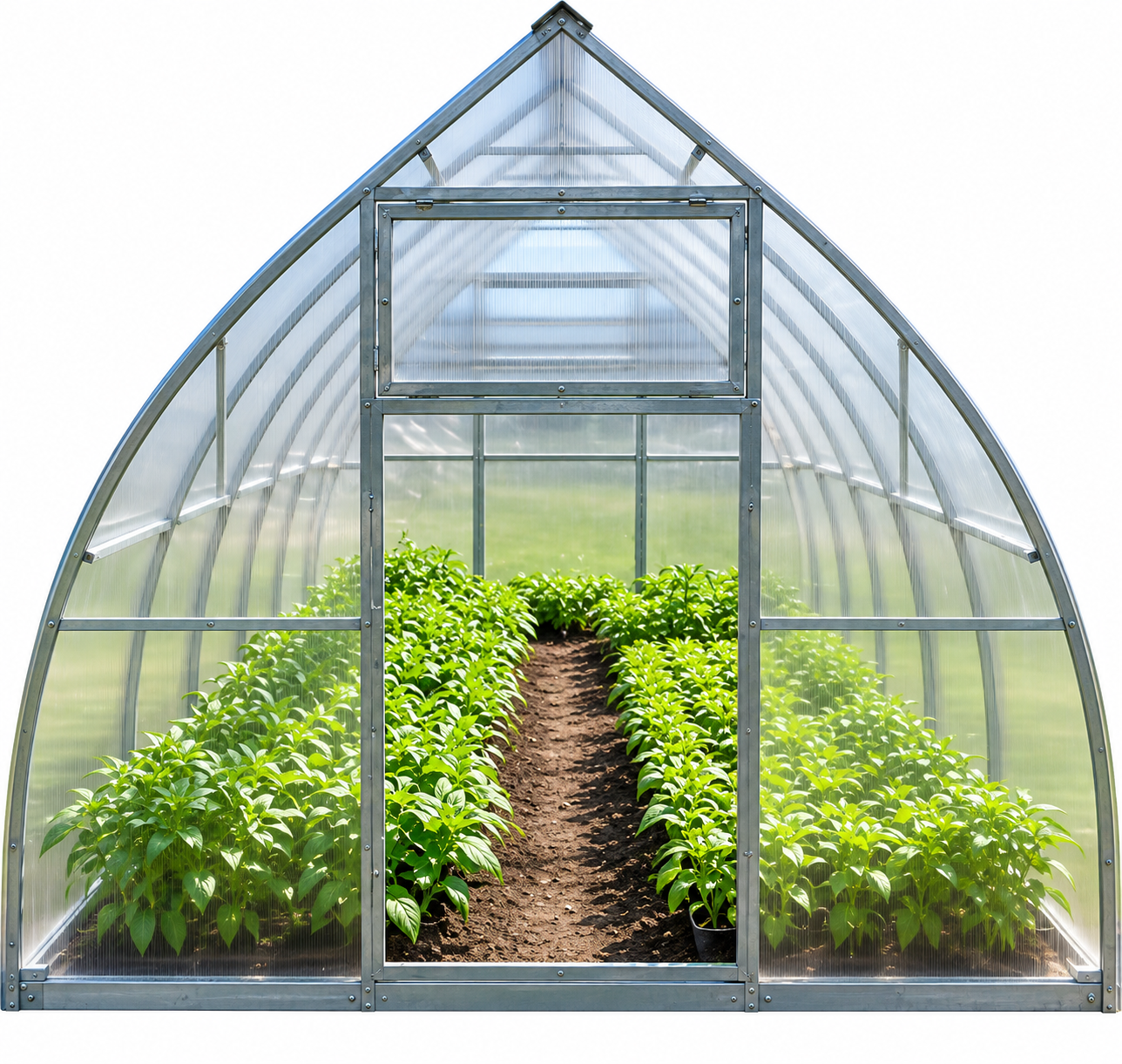
Three-layer IR film is a multi-layer polyethylene material containing functional ceramics designed to control solar radiation, temperature, and microclimate inside greenhouses and hothouses.
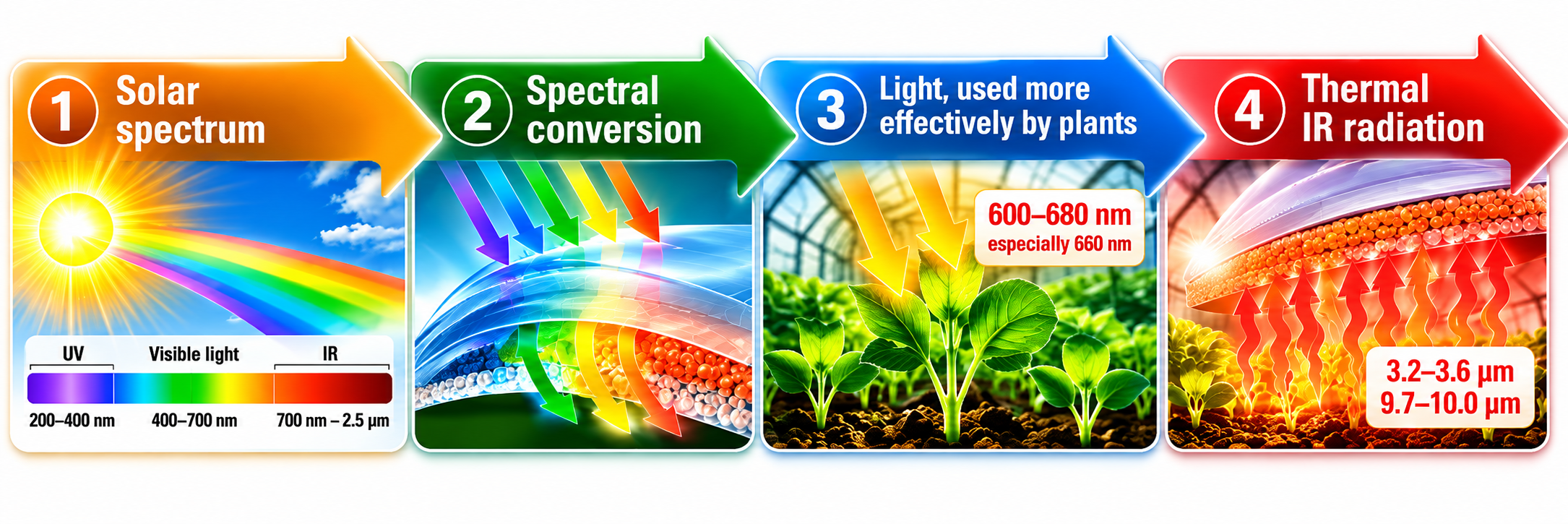
Its primary feature is not merely heat retention, but cascade conversion of solar energy: the portion of solar radiation typically utilized inefficiently by plants or lost is converted by functional ceramics into infrared radiation. It allows converting solar energy into the IR range with peak emissions near 3.3 and 9.7 µm.
In doing so, the three-layer structure accomplishes several critical tasks at once:
- converts a portion of the solar spectrum;
- facilitates the utilization of light in the wavelength band most effective for photosynthesis;
- converts a portion of energy into thermal IR radiation;
- reduces backward thermal losses;
- retains heat after sunset;
- contributes to temperature stabilization;
- reduces soil moisture evaporation;
- creates a significantly more favorable light and temperature regime for plant cultivation.
Three-Layer Cascade Composite
Layer-by-layer architecture and functional purpose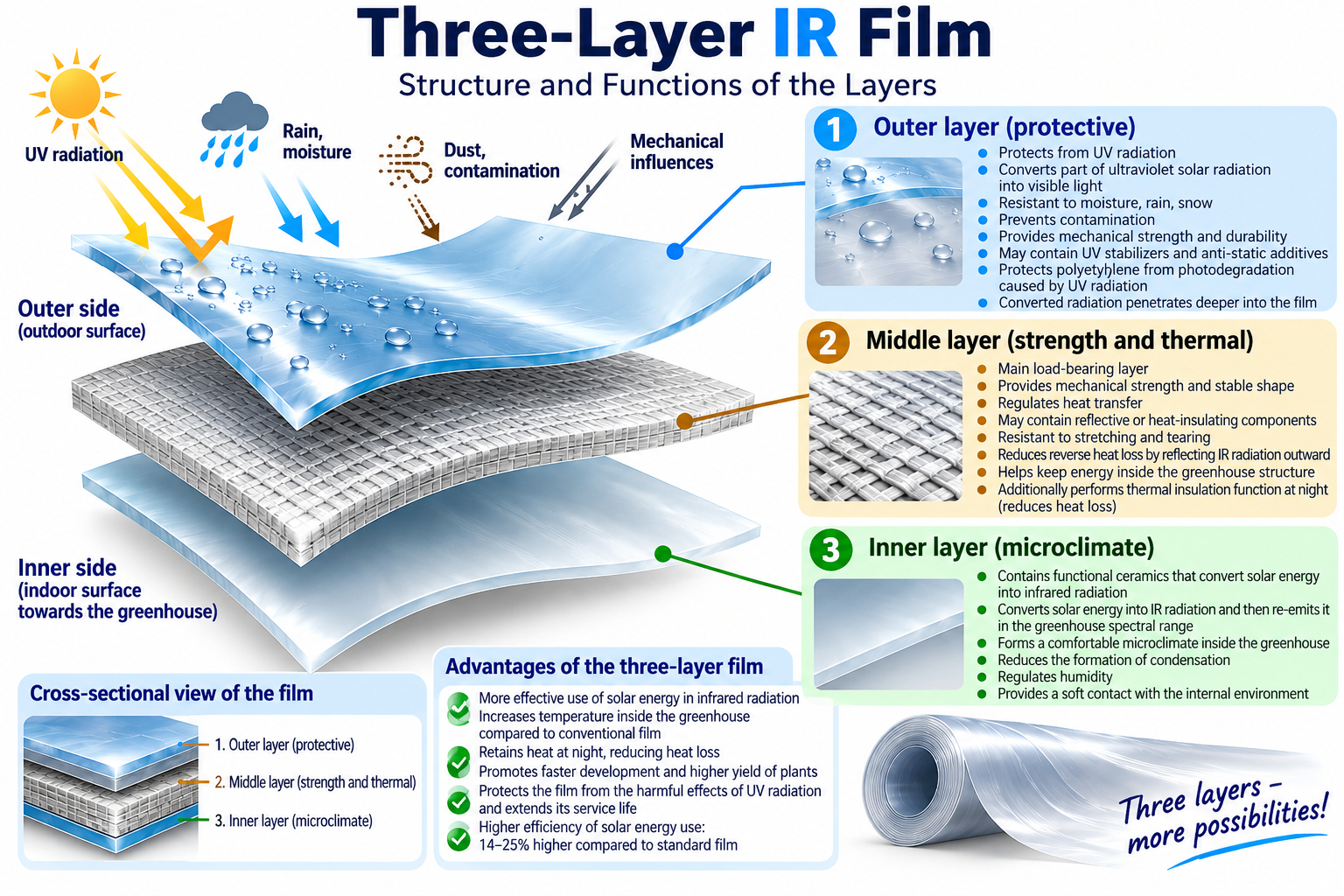
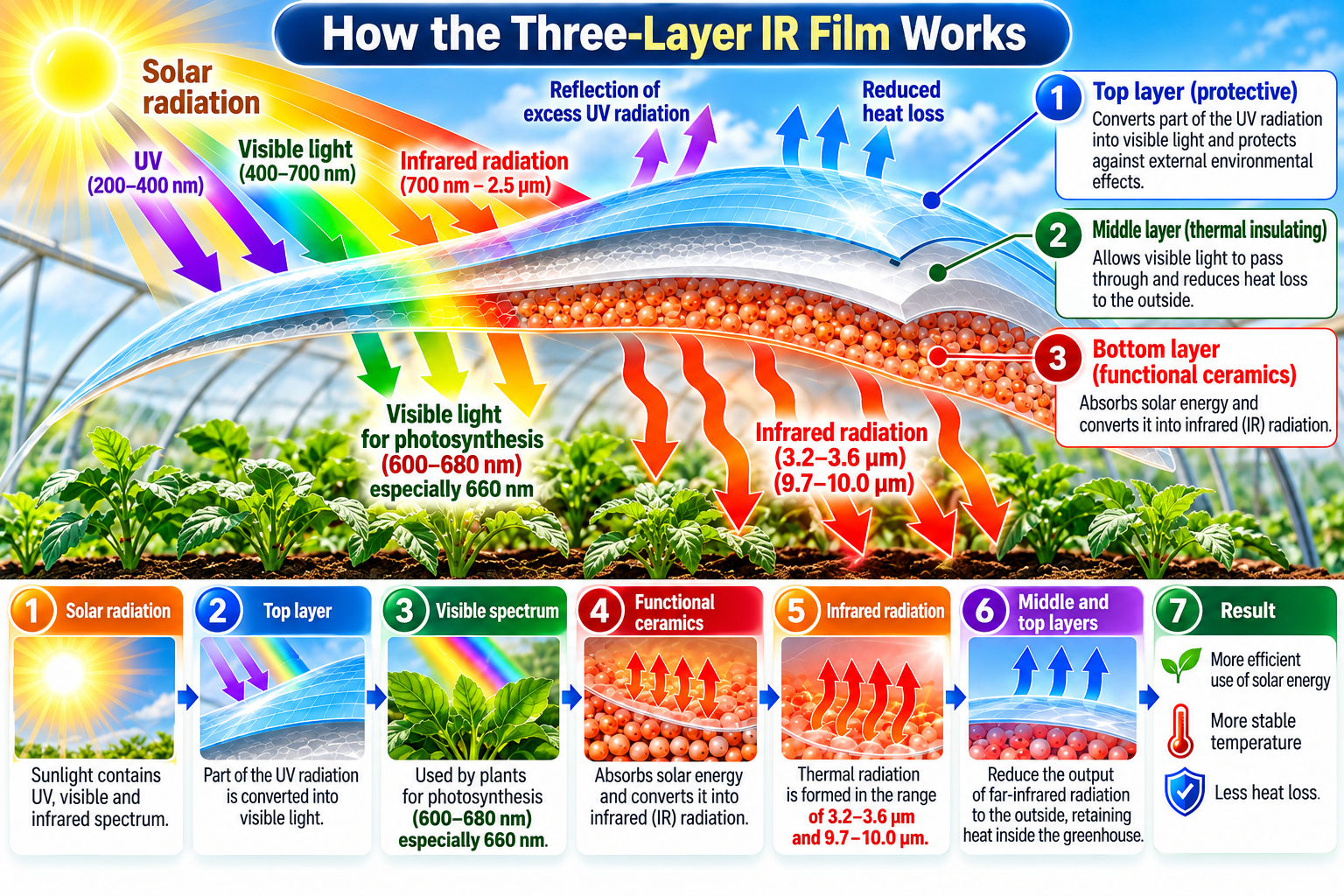
Film Operation Mechanism
The mechanism can be represented as a sequential process chain:
Crucial Range of 600–680 nm
This aspect is directly tied to plant physiology.
The 600–680 nm spectral range is recognized as vital for photosynthesis.
The wavelength region near 660 nm is particularly prominent.
Shifting phytochrome into its active state stimulates enzymes associated with plant growth and vegetative development.
Thus, the purpose of the film is not solely to "heat the greenhouse".
It simultaneously establishes an optimized spectral regime tailored to plant biology:
Impact on Plant Development
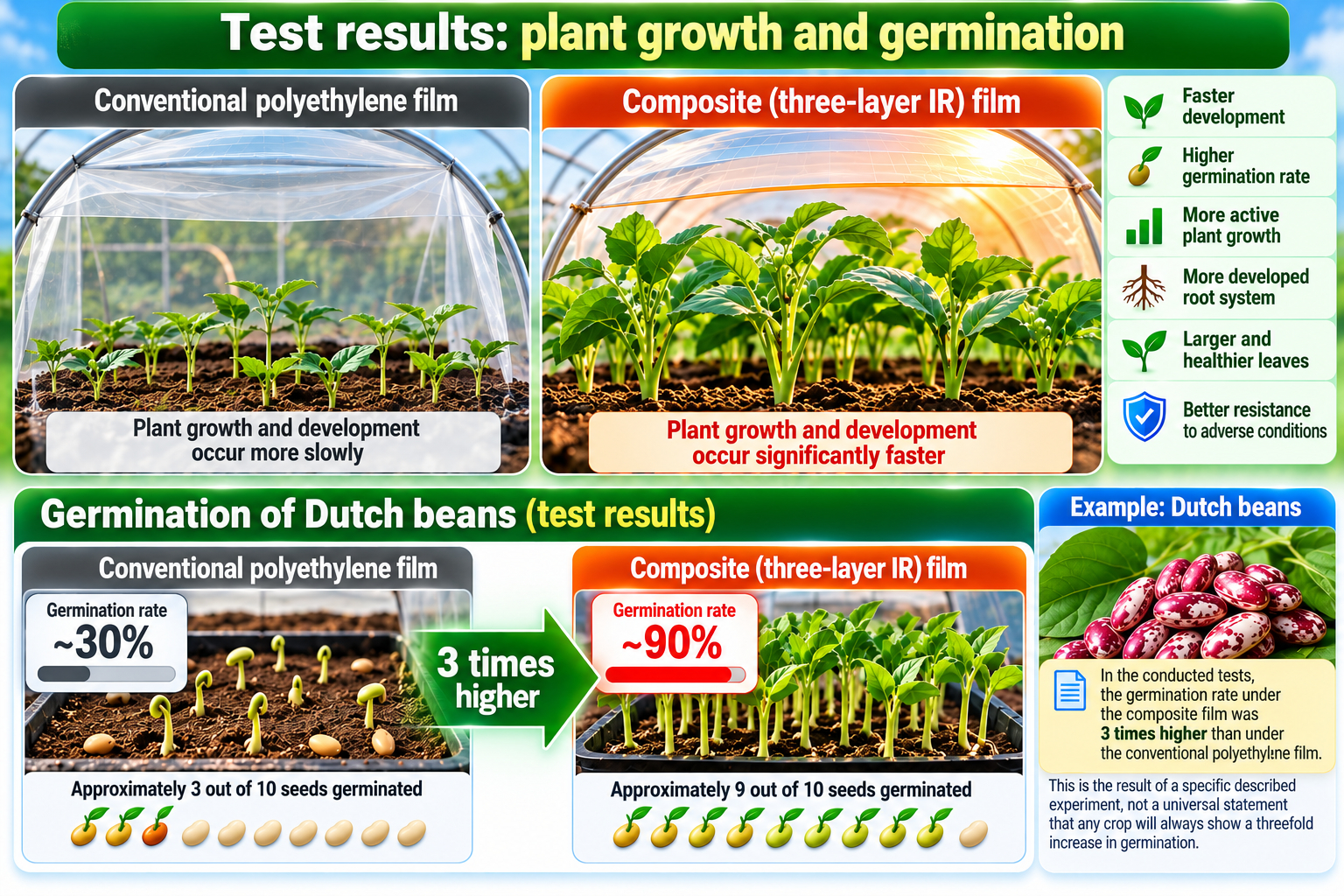
Under composite films, the following effects were observed:
Impact on Photosynthesis
Radiation in the 600–680 nm band directly supports photosynthetic processes.
The 660 nm wavelength is specifically associated with the active Pfr state of phytochrome.
Radiation around 750 nm can revert phytochrome to an inactive state; therefore, the composite is engineered to maximize transmission primarily within the favorable 600–680 nm band.
Thus, the objective is not simply providing "more light", but fundamentally tailoring the spectral distribution of transmitted and converted radiation.
Impact on Temperature
Our film retains temperature far more effectively compared to single-layer composites and standard polyethylene film.
Remarkably, the thermal effect adapts dynamically to ambient environmental conditions.
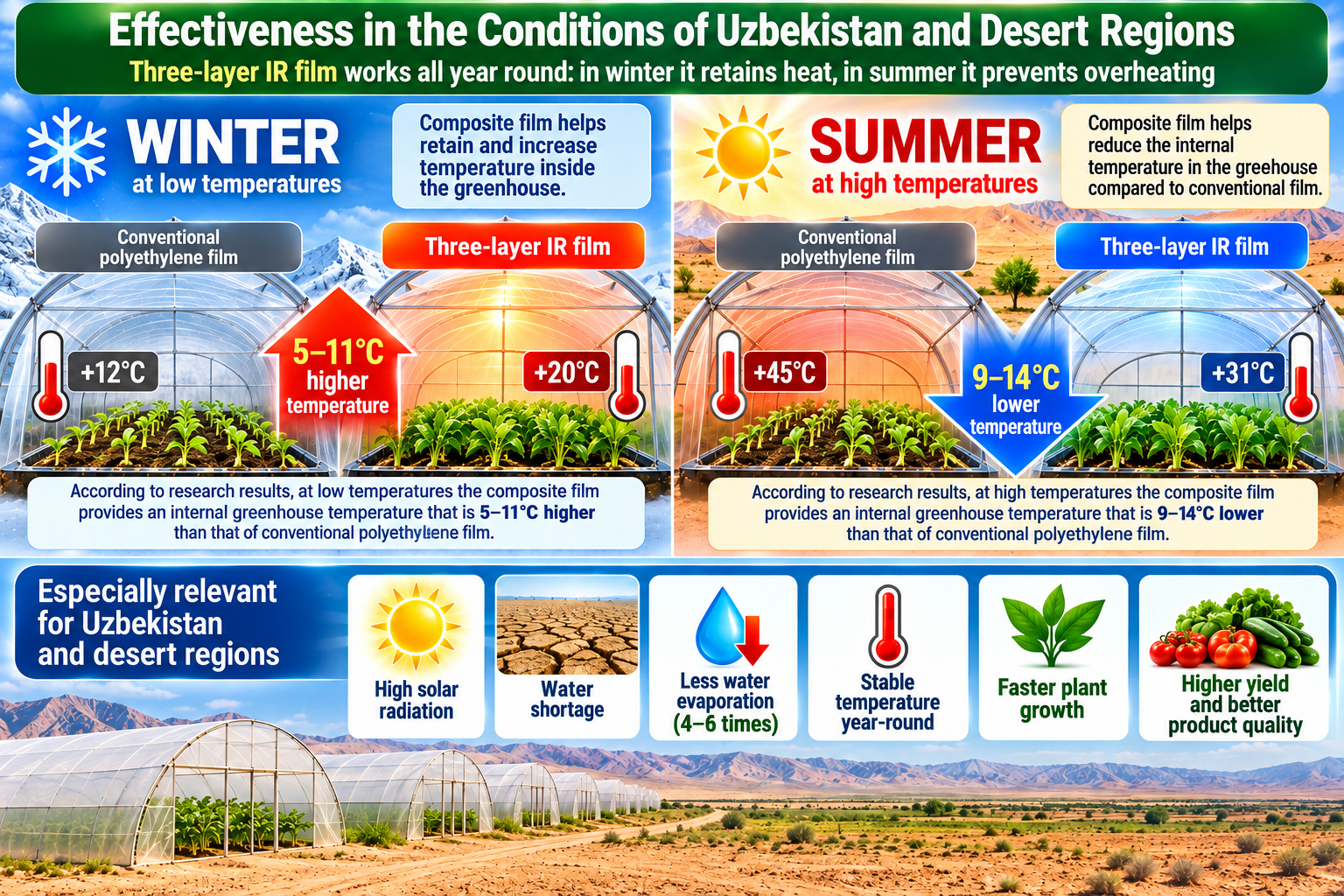
Under low ambient temperatures, the composite maintains higher internal temperatures, whereas under intense external heat, it helps maintain cooler internal temperatures.
In experimental trials, the three-layer composite demonstrated the following differentials relative to conventional film:
The capacity of our composite to stabilize temperature represents a major competitive distinction from conventional greenhouse film.
What Happens at Night
At night, when the solar source is absent, preventing the loss of accumulated daytime heat becomes paramount.
Here, the second and third layers operate in concert.
The functional ceramics emit far-infrared radiation, while the overlying layers impede its radiative escape to the exterior.
Furthermore, polyethylene exhibits low transmittance in the 3.2–3.6 µm region, further assisting nocturnal thermal retention.
As a result, the film operates not only as a "solar energy converter" by day, but also as an effective thermal radiation barrier by night.
Impact on Humidity and Water Conservation
This is another highly consequential experimental finding.
Testing with composite films revealed a dramatic reduction in moisture evaporation.
Under our composite films, soil moisture evaporation is reduced approximately 4–6 times compared to standard polyethylene film.
This means the film simultaneously provides:
heat retention + moisture conservation + spectral light optimization.
For greenhouse agriculture, this is exceptionally valuable in arid and hot climates.
Application in High Solar Radiation and Arid Regions
Implementation of this technology in desert and arid environments.
In hot climates, greenhouse management requires not only warming during cold winter nights, but equally avoiding excessive heat stress during peak daylight hours.
Experimental observations confirm precisely this dual adaptive behavior:
Combined with a 4–6x reduction in moisture evaporation, this makes the technology uniquely suited for regions with high solar insolation and acute water scarcity.
Key Advantage of the Three-Layer Architecture
Standard Greenhouse Film
Sunlight → greenhouse interior → substantial energy lost outward.
Three-Layer IR Film
Sunlight → spectral conversion → photosynthetically beneficial radiation + IR heat → reliable retention inside the greenhouse.
It is precisely the synergy of three functionally distinct layers that enables this continuous cascade energy conversion system.
Summary: Key Benefits of Three-Layer IR Film